

Approach
The Design Process - General Approach
The design of any physical space is a process of combining ideas about function and appearance to create something beautiful and useful. This begins with the client’s goals for the creation or improvement of a space. From this follows a description of the functions that the space should provide, and their size requirements. Along with those functional requirements, there is the site and its context, which should be carefully analyzed to identify opportunities and constraints. There are many other possible factors in any specific design process, such as regulatory requirements, desired sustainable features, stylistic influences, and the client’s likes and dislikes (to name only a few).
There is, of course, an art to design that can’t be quantified, and a good designer is able to synthesize all the factors listed above and bring forth something beautiful. In landscape design, there is the added element of working with living plants. This adds great potential and extends the interest of the design over time as plants vary through the seasons and grow through the years.
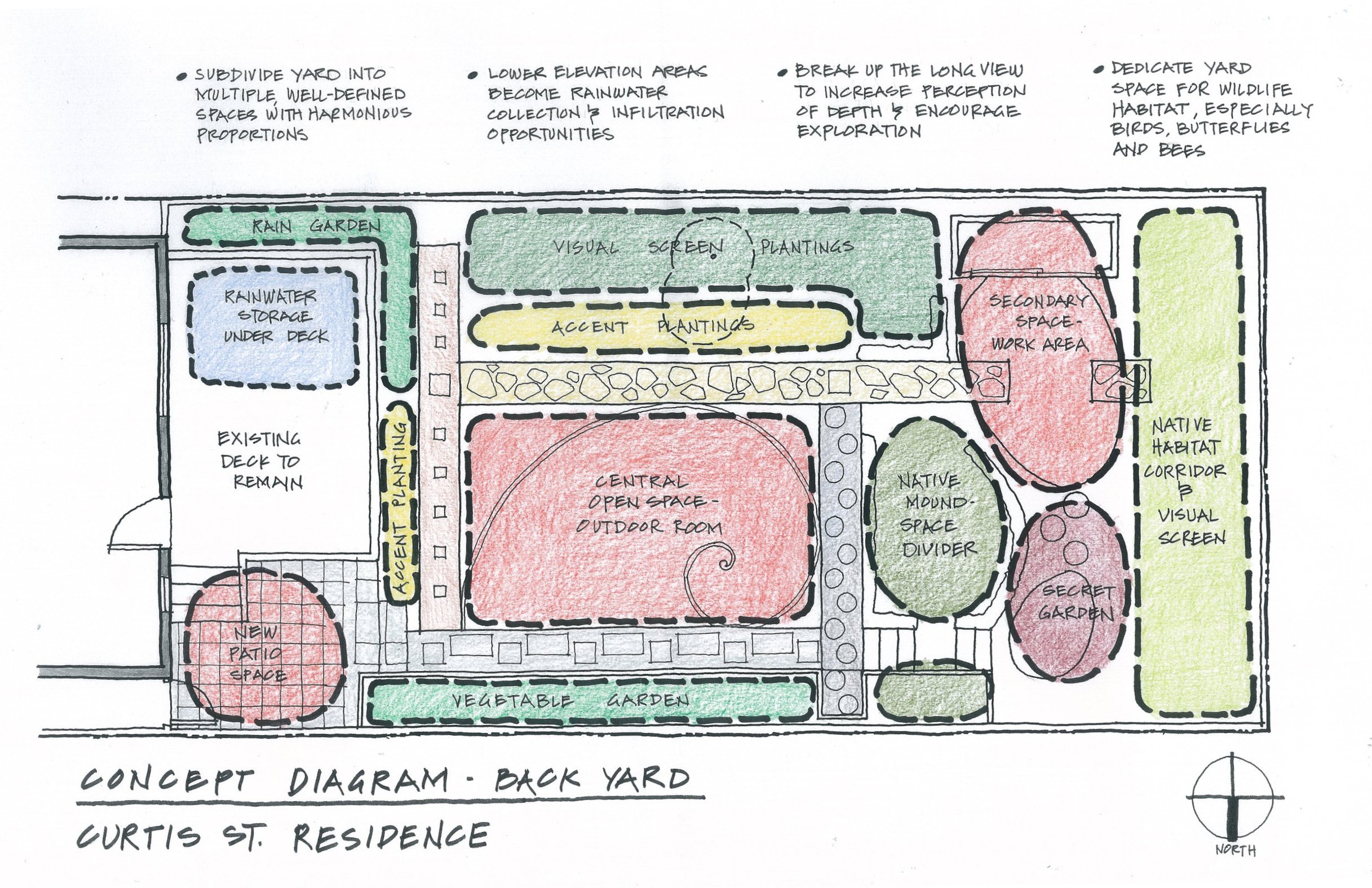
The design process starts with broader concepts which are gradually refined and developed in more detail, leading ultimately to technical drawings that serve as instructions for the construction of that design. It is critical to work on paper before putting a shovel in the ground: forethought and planning not only make the construction more efficient and less costly, they also allow everyone to see the greater possibilities and envision what could be. Drawings, however, are only a means to an end; a beautiful drawing does not always equal a beautiful space. A good designer is one who can not only conceive of and draw a great design, but also shepherd it from drawing to completed construction.
Design Principles
The following are the general design principles that guide the way Rhyne Designs approaches any project:
-
A landscape design must provide what its users need to inhabit and enjoy the space. This can range from a shady spot for a backyard reading bench to a certain type of play area that neighborhood kids lack. A key component of good landscape design is understanding the occupants and what they need in their outdoor space. Meeting the user’s needs also includes meeting the budget of the client, as well as designing something that the owner can successfully maintain. A well designed landscape becomes well used, well cared for, and even loved, giving it a long life that also makes it more sustainable.
-
There are far too many of us on this planet at this point to not be doing all we can to minimize our impact to the natural systems that sustain us and the earth. Sustainability is a term that can encompass many things, and it is thrown around quite a bit these days, I've written more on its definition and usage in my Blog. When looking specifically at landscape sustainability, it may seem like a garden is by default something good for the environment; however, the specifics of its design can go much, much further towards respect and restoration of natural systems. From using locally native plants, to collecting rainwater for irrigation, to installing recycled concrete walls, there are many techniques to create sustainable landscapes.
-
Every site is unique and contains elements that can inspire the landscape design. Existing plantings, views, topography, and the shadows of neighboring trees & structures are a few examples. It is important to let the site express itself, and to not damage the characteristics that contribute to its uniqueness and sense of belonging to a particular neighborhood, region or climate. A landscape design that is in tune with the site and its surroundings is one that feels like it belongs.
-
Rhyne Designs firmly believes that a well-designed landscape should be a fun thing to experience. It should stimulate the senses, bring a smile to your face, provide a relief from the stress of life, and even inspire great thoughts. There are limitless possibilities for a designed landscape, and we always seek to bring fun into the designs, even for a tiny space or limited budget.